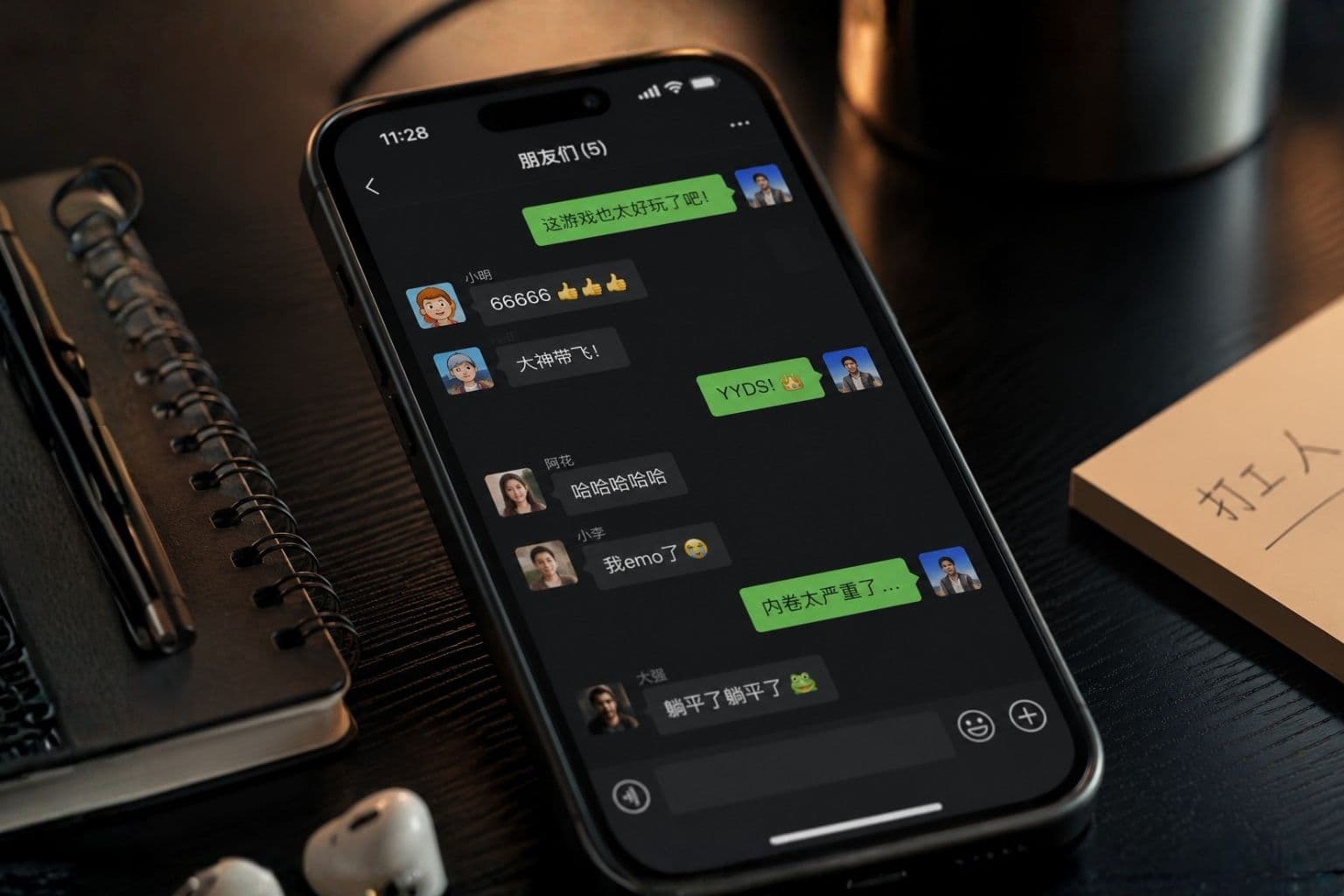

Scroll through Chinese social media—WeChat, Douyin, Xiaohongshu, Bilibili—and you'll quickly notice that people don't talk like your textbook. They drop 666, call someone YYDS, complain about 内卷, and say they're 躺平 after a long week. If you're learning Mandarin, understanding Chinese internet slang is one of the fastest ways to sound natural and actually follow real conversations online.
This guide breaks down the most common Chinese texting abbreviations, viral Chinese memes, and everyday slang you'll see in 2026—with pinyin, meaning, and example usage.
Not sure how to read a term? Drop it into our Pinyin Converter. Want to memorize the vocab? Try Memory Cards.
Did You Know? For quick, scannable deep dives on individual terms and culture quirks, browse our Did You Know? collection—especially the internet & slang category.
Why Chinese Internet Slang Matters for Learners
Textbooks teach formal Mandarin. The internet teaches real Mandarin.
- Comments and captions on Chinese apps are packed with slang.
- Friends and language partners use abbreviations constantly in chat.
- Memes and trending phrases change every year—knowing them helps you stay culturally fluent.
- Bite-sized facts on Did You Know? help you learn one slang term or cultural hook at a time—perfect between longer reads like this one.
You don't need to use every term yourself. But recognizing them will make reading Chinese social media, watching livestreams, and chatting with native speakers much easier.
Reactions, Praise & Hype
These are the words people reach for when something is impressive, funny, or just worth reacting to.
666 (liù liù liù)
Meaning: "Awesome" / "Nice!" / "Pro move"
The number 6 (六, liù) sounds like liū (溜), which means "smooth" or "skilled." Saying 666 is like giving a thumbs-up—especially in gaming, livestreams, and comment sections.
Example: 这操作666!(Zhè cāozuò liùliùliù! — "That play was sick!")
Did you know? Why does 666 mean "awesome" in China? — a quick read on how a "unlucky" number in Western culture became a top compliment online.
牛逼 (niú bī) / 牛 (niú)
Meaning: "Badass" / "Amazing" / "That's impressive"
One of the most classic Chinese internet compliments. 牛 alone works as shorthand. Note: the full phrase is crude in origin, so use it casually with friends—not in formal writing.
Example: 你太牛了!(Nǐ tài niú le! — "You're awesome!")
YYDS
Meaning: "Forever the GOAT" (Greatest Of All Time)
Stands for 永远的神 (yǒngyuǎn de shén — "eternal god"). Used to hype up someone or something you admire—an athlete, a singer, a restaurant, even a life hack.
Example: 这家奶茶YYDS!(Zhè jiā nǎichá YYDS! — "This milk tea shop is the GOAT!")
绝绝子 (jué jué zi)
Meaning: "Absolutely amazing" or "Absolutely terrible" (context-dependent)
A Gen-Z favorite from a few years back that's still everywhere. The tone (positive or sarcastic) depends on context and emoji.
Example: 这颜色绝绝子!(Zhè yánsè juéjuézi! — "This color is chef's kiss!")
哈哈哈 (hā hā hā)
Meaning: "Hahaha" — laughter in text
Chinese people often type 哈 repeatedly to show how hard they're laughing. More 哈 = more laughter.
Variations: 哈哈 / 哈哈哈哈 / 笑死我了 (xiào sǐ wǒ le — "I'm dying laughing," often abbreviated xswl)
awsl
Meaning: "Too cute / I'm overwhelmed (in a good way)"
From 啊我死了 (ā wǒ sǐ le — literally "ah, I'm dead"). Used when something is adorable or emotionally hits you hard.
Example: 这猫awsl!(Zhè māo awsl! — "This cat is killing me, so cute!")
Work, Burnout & Life Pressure
Modern Chinese slang reflects real anxieties about work culture. These terms dominate posts about jobs, exams, and hustle culture.
内卷 (nèi juǎn)
Meaning: "Involution" / toxic over-competition
Originally an academic term, 内卷 describes situations where everyone works harder and harder just to stay in the same place—like students grinding for exams or employees doing unpaid overtime because everyone else does.
Example: 现在工作太内卷了。(Xiànzài gōngzuò tài nèijuǎn le. — "Work is way too competitive these days.")
躺平 (tǎng píng)
Meaning: "Lie flat" / opt out of the rat race
The counter-movement to 内卷. 躺平 means rejecting relentless hustle—doing the minimum, prioritizing rest, or simply refusing to participate in toxic competition.
Example: 我不想卷了,我想躺平。(Wǒ bù xiǎng juǎn le, wǒ xiǎng tǎngpíng. — "I don't want to grind anymore, I want to lie flat.")
打工人 (dǎ gōng rén)
Meaning: "Working stiff" / everyday employee
A self-deprecating label for ordinary workers—office staff, delivery riders, anyone punching the clock. Often used in memes about Monday mornings and long commutes.
Example: 打工人,打工魂!(Dǎgōngrén, dǎgōnghún! — "Workers unite!" — a popular meme phrase)
996
Meaning: Work 9am–9pm, 6 days a week
Refers to the infamous overtime culture in some Chinese tech companies. It's less a joke and more a symbol of burnout—often discussed alongside 内卷 and 躺平.
摸鱼 (mō yú)
Meaning: "Slack off" / "Goof off at work"
Literally "touch fish." 摸鱼 means doing non-work stuff during work hours—scrolling Weibo, shopping, watching videos.
Example: 下午我在摸鱼。(Xiàwǔ wǒ zài mōyú. — "I was slacking off this afternoon.")
社畜 (shè chù)
Meaning: "Corporate slave" / overworked office worker
From Japanese (shachiku), now common in Chinese internet culture. Describes someone trapped in a draining job with little freedom.
Emotions, Moods & Mental State
emo
Meaning: Feeling down, melancholy, emotionally fragile
Borrowed from English "emo," but used more broadly in Chinese—late-night sadness, nostalgia, or just being in your feelings. Often paired with sad music or reflective captions.
Example: 今晚有点emo。(Jīnwǎn yǒudiǎn emo. — "I'm feeling a bit emo tonight.")
破防 (pò fáng)
Meaning: "Defense broken" / emotionally overwhelmed
From gaming (breaking through someone's defenses), 破防 now means something hit you emotionally—made you cry, laugh uncontrollably, or lose composure.
Example: 看到这个视频我破防了。(Kàndào zhège shìpín wǒ pòfáng le. — "This video broke me.")
摆烂 (bǎi làn)
Meaning: "Let it rot" / give up trying
When someone stops putting in effort because they feel nothing will improve anyway. Stronger and more cynical than 躺平.
Example: 考试来不及了,摆烂吧。(Kǎoshì láibují le, bǎilàn ba. — "Exam's too soon, let's just give up.")
治愈 (zhì yù)
Meaning: "Healing" / wholesome and comforting
Used to describe cute videos, cozy music, or anything that soothes stress. Very common on Xiaohongshu and Douyin.
Example: 太治愈了!(Tài zhìyù le! — "So healing!")
上头 (shàng tóu)
Meaning: "Hooked" / intensely into something
From gambling slang—when you're "on a streak" and can't stop. Now used for binge-watching a drama, obsessing over a song, or being emotionally carried away.
Example: 这剧太上瘾了,我上头了。(Zhè jù tài shàngyǐn le, wǒ shàngtóu le. — "This show is addictive, I'm hooked.")
Quick break: Pick one term from this section and look it up later on Did You Know?—or jump straight to internet & slang facts for more like 666 and 520.
Text Abbreviations & Roman Letter Slang
Chinese chat is full of Chinese texting abbreviations—mostly pinyin initials and borrowed English.
| Abbreviation | Full form | Meaning |
|---|---|---|
| xswl | 笑死我了 (xiào sǐ wǒ le) | LMAO / dying of laughter |
| yyds | 永远的神 (yǒngyuǎn de shén) | GOAT / all-time great |
| awsl | 啊我死了 (ā wǒ sǐ le) | Overwhelmingly cute/moving |
| u1s1 | 有一说一 (yǒu yī shuō yī) | TBH / to be honest |
| nsdd | 你说得对 (nǐ shuō de duì) | "You're right" |
| yysy | 有一说一 | Same as u1s1 |
| bdjw | 不懂就问 (bù dǒng jiù wèn) | "I'll just ask" (no shame in asking) |
| zqsg | 真情实感 (zhēn qíng shí gǎn) | Genuine feelings / being real |
| pyq | 朋友圈 (péngyǒu quān) | WeChat Moments (like a social feed) |
| cp | 情侣 / 配对 (couple) | Ship / romantic pairing (from fan culture) |
| dbq | 对不起 (duìbuqǐ) | Sorry |
| srds | 虽然但是 (suīrán dànshì) | "Although... but..." |
| gkd | 搞快点 (gǎo kuài diǎn) | Hurry up / drop it already (hype) |
| yygq | 阴阳怪气 (yīnyáng guàiqì) | Passive-aggressive / snarky tone |
Tip: In WeChat, people also drop punctuation and spaces—在吗 (zài ma — "you there?") becomes just 在?
Number codes are another big part of Chinese texting—homophones turned into shorthand:
More number-slang facts live in our Did You Know? internet section.
Viral Memes & Trending Phrases
These Chinese memes spread fast and often fade within a year—but many stick around.
栓Q (shuān Q)
Meaning: "Thank you" (humorous / sometimes sarcastic)
A playful mispronunciation of "thank you" that went viral. Can be sincere or ironic depending on tone.
Example: 栓Q,帮我大忙了。(Shuān Q, bāng wǒ dà máng le. — "Thank you, you really helped me out!" — often said jokingly.)
芭比Q了 (bā bǐ Q le)
Meaning: "It's over" / "I'm done for"
From "barbecue," sounding like "完蛋了" (wán dàn le — "it's finished"). Used when something goes wrong or you're doomed.
Example: 没复习,芭比Q了。(Méi fùxí, bābǐ Q le. — "Didn't study—I'm screwed.")
凡尔赛 (fán ěr sài)
Meaning: Humblebrag / Versailles-style flex
From "Versailles literature" (凡尔赛文学)—pretending to complain while actually showing off wealth or success.
Example: 好烦,男朋友又送了我一个包。(Hǎo fán, nán péngyǒu yòu sòng le wǒ yí ge bāo. — "So annoying, my boyfriend bought me another bag." — classic 凡尔赛)
社死 (shè sǐ)
Meaning: "Social death" / extreme embarrassment
When you do something so awkward you wish you could disappear—tripping in public, sending a message to the wrong group chat, etc.
Example: 当着全班的面叫老师爸爸,社死了。(Dāngzhe quánbān de miàn jiào lǎoshī bàba, shèsǐ le. — "Called my teacher 'dad' in front of the whole class—social death.")
显眼包 (xiǎn yǎn bāo)
Meaning: "Attention grabber" / someone who stands out (often embarrassingly)
The person who always makes a scene or tries too hard to be noticed.
Example: 他又在群里发长语音了,真是个显眼包。(Tā yòu zài qún lǐ fā cháng yǔyīn le, zhēnshi ge xiǎnyǎnbāo. — "He sent another long voice message in the group—total attention seeker.")
纯纯的 (chún chún de)
Meaning: "Purely" / "Straight-up" (often for emphasis or irony)
Example: 纯纯的浪费时间。(Chúnchún de làngfèi shíjiān. — "A complete waste of time.")
泰裤辣 (tài kù là)
Meaning: "So cool!" (playful mispronunciation of 太酷了)
A meme pronunciation that spread from a viral performance clip. Used jokingly to hype something up.
Gaming & Subculture Slang
If you watch Bilibili or Chinese gaming streams, you'll see these constantly. Many started in gaming chat before spreading everywhere—similar to how 666 became a universal compliment.
| Term | Pinyin | Meaning |
|---|---|---|
| 菜 | cài | Noob / bad at the game ("You're so 菜!") |
| 大神 | dà shén | Pro / god-tier player |
| 带飞 | dài fēi | Carry the team to victory |
| 开黑 | kāi hēi | Play together as a group (online) |
| 氪金 | kè jīn | Spend real money in games ("pay to win") |
| 肝 | gān | Grind (as in 肝游戏 — grind a game for hours) |
| 欧皇 | ōu huáng | Lucky person (got great drops/rewards) |
| 非酋 | fēi qiú | Unlucky person (opposite of 欧皇) |
Compliments, Roasts & Daily Chat
亲 (qīn)
Meaning: "Dear" — classic Taobao customer service tone, now used playfully in chat.
Example: 亲,包邮吗?(Qīn, bāoyóu ma? — "Hey, is shipping free?")
杠精 (gàng jīng)
Meaning: Contrarian / someone who argues for the sake of arguing
Example: 我说天气不错,他非要杠说会下雨。(Wǒ shuō tiānqì búcuò, tā fēi yào gàng shuō huì xiàyǔ. — "I said the weather's nice; he had to argue it'll rain.")
柠檬精 (níng méng jīng)
Meaning: "Sour lemon spirit" — a jealous person
When someone is clearly envious but won't admit it.
Example: 别当柠檬精了,人家成功你也行的。(Bié dāng níngméngjīng le, rénjiā chénggōng nǐ yě xíng de. — "Stop being jealous—if they made it, you can too.")
真香 (zhēn xiāng)
Meaning: "So good!" (after initially refusing)
From the meme "I'll never eat it... 真香!" — doing something you swore you wouldn't and loving it.
奥利给 (ào lì gěi)
Meaning: "Let's go!" / "You got this!"
An energetic hype phrase from a viral video, still used for encouragement. (For a similar "literal vs. real meaning" surprise, see why 加油 means "you can do it".)
How to Learn and Use Chinese Internet Slang
- Follow Chinese content you enjoy — Douyin, Bilibili, Weibo, or Xiaohongshu. Slang sticks when you see it in context.
- Snack on Did You Know? facts — One headline, one explanation, one term. Great for building a slang habit without overwhelm.
- Don't force it — Using yyds in a formal email won't go well. Save slang for casual chat.
- Check the vibe — Many terms (绝绝子, 栓Q, 芭比Q) can be sincere or sarcastic. Emojis and context matter.
- Learn the full phrase behind abbreviations — Knowing that xswl = 笑死我了 helps you remember and recognize variations.
- Practice with real tools — Use Memory Cards to drill slang vocabulary by theme, Pinyin Converter when you're unsure how to read a term, and Chintonic for pronunciation and tone feedback so slang doesn't just live in your notes.
Quick Reference: 30 Essential Terms
| Term | Pinyin | English |
|---|---|---|
| 666 | liù liù liù | Awesome / nice one |
| 牛逼 | niú bī | Badass / amazing |
| YYDS | yǒngyuǎn de shén | GOAT / the best ever |
| 哈哈哈 | hā hā hā | Hahaha |
| emo | emo | Feeling down / in your feelings |
| 内卷 | nèi juǎn | Toxic over-competition |
| 躺平 | tǎng píng | Opt out / lie flat |
| 打工人 | dǎ gōng rén | Working stiff |
| 摸鱼 | mō yú | Slack off at work |
| 破防 | pò fáng | Emotionally overwhelmed |
| 摆烂 | bǎi làn | Give up / let it rot |
| 社死 | shè sǐ | Social death (cringe) |
| 真香 | zhēn xiāng | "Actually, it's great!" |
| 上头 | shàng tóu | Hooked / obsessed |
| 治愈 | zhì yù | Healing / wholesome |
| 凡尔赛 | fán ěr sài | Humblebrag |
| xswl | xiào sǐ wǒ le | LMAO |
| awsl | ā wǒ sǐ le | Too cute / I'm dead |
| u1s1 | yǒu yī shuō yī | To be honest |
| 芭比Q了 | bā bǐ Q le | It's over / I'm doomed |
| 栓Q | shuān Q | Thank you (meme) |
| 绝绝子 | jué jué zi | Amazing (or awful) |
| 显眼包 | xiǎn yǎn bāo | Attention seeker |
| 杠精 | gàng jīng | Internet contrarian |
| 柠檬精 | níng méng jīng | Jealous person |
| 社畜 | shè chù | Overworked office drone |
| 欧皇 / 非酋 | ōu huáng / fēi qiú | Lucky / unlucky person |
| 氪金 | kè jīn | Spend money in games |
| 纯纯的 | chún chún de | Purely / totally |
| 泰裤辣 | tài kù là | So cool! (meme) |
Practice what you learned
- Memory Cards — Flashcard-style practice for themed Mandarin vocabulary
- Pinyin Converter — Look up pronunciation and tone marks for any slang term
- Did You Know? — Quick deep dives on individual terms like 666 and 520
Final Thoughts
Chinese internet slang evolves fast—what's trending on Douyin in 2026 might look different by 2027. But the patterns stay the same: pinyin abbreviations, numbered memes, work-culture venting, and emotional reaction words.
Start by recognizing the big ones—666, YYDS, 内卷, 躺平, emo, xswl—and build from there. The more you read real Chinese online, the more natural it feels.
Bite-sized Chinese culture and language facts—666, 520, 1314, tea etiquette, lucky numbers, and more. Filter by internet & slang for terms like the ones in this guide.
Try Chintonic →
Go beyond reading slang—practice tones, pronunciation, and listening with AI feedback, so you're ready for whatever the Chinese internet throws at you next.
Keywords:
Chinese internet slang, Chinese texting abbreviations, Chinese memes, learn Chinese online, Mandarin slang 2026, YYDS meaning, 内卷, 躺平, Chinese social media language, Chintonic, Did You Know